Across the red dust plains of the Pilbara, the open-cut coal pits of Queensland, and the desert mines of the Northern Territory, one trade keeps Australia’s massive machinery in motion — the Heavy Equipment Operator.
These operators control the biggest vehicles on earth. Haul trucks taller than two-storey houses, bulldozers that move thousands of tonnes of rock per day, and excavators powerful enough to fill a semi-trailer in a single scoop. They are the unseen force behind every mine, road, and construction project that fuels Australia’s growth.
In 2026, the demand for skilled operators has surged as new lithium, iron ore, gas, and infrastructure projects ramp up. This guide explores what FIFO Heavy Equipment Operators actually do, where they work, how much they earn, and how to join this high-paying and adventurous career.
1. The Role of a FIFO Heavy Equipment Operator
Every load moved, every pit shaped, and every ton of ore transported starts with an operator.
FIFO Operators work in mining, civil, and energy projects across remote Australia. Their main task is to safely and efficiently control earthmoving machinery used in extraction, haulage, and site preparation.
Main Responsibilities
- Operate and maintain heavy mobile plant such as trucks, dozers, graders, loaders, and excavators.
- Perform daily pre-start inspections and report defects.
- Follow load plans, GPS systems, and production targets.
- Monitor haul roads, pit design, and loading operations.
- Maintain communication with dispatch, supervisors, and spotters.
- Comply with strict safety, fatigue, and environmental standards.
- Assist in basic servicing, cleaning, and refueling of machinery.
Operators are the heartbeat of production — without them, not a single tonne leaves the ground.
2. Types of Machines Operated on FIFO Sites
Every operator develops specialisation across different machine types depending on site and experience.
| Equipment Type | Description | Example Models and Brands |
|---|---|---|
| Haul Trucks | Transport ore and waste rock from pit to dump or crusher. | CAT 793F, Komatsu 930E, Hitachi EH5000 |
| Excavators | Load trucks and dig foundations. | Hitachi EX5600, Komatsu PC8000, Liebherr R9800 |
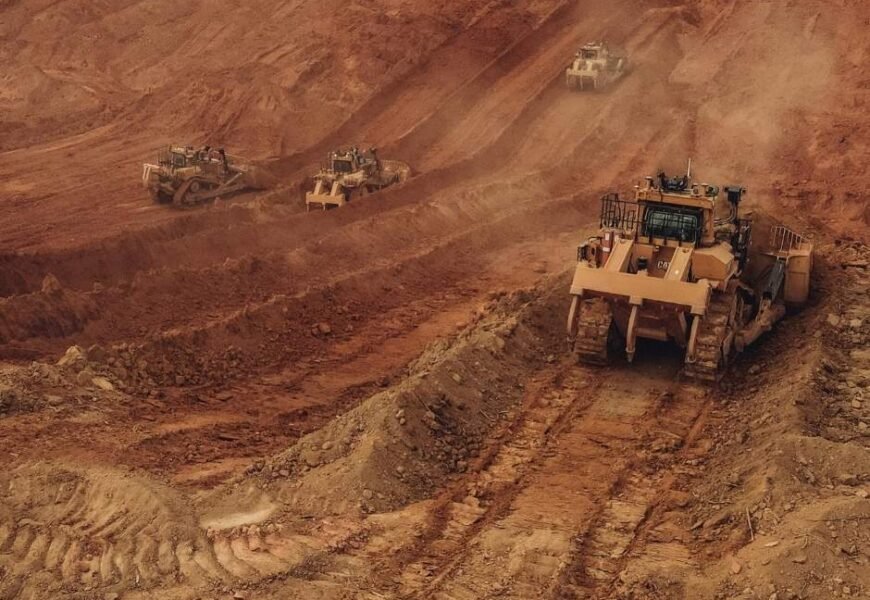
| Dozers | Push overburden, maintain haul roads, and prepare ground. | CAT D11, Komatsu D475, Liebherr PR776 |
| Graders | Level surfaces and maintain pit roads. | CAT 16M3, Komatsu GD655 |
| Loaders | Load stockpiles, maintain ROM pads, move materials. | CAT 994K, Volvo L350H |
| Water Carts | Control dust across mine roads. | CAT 777 Water Truck, Bell B40D Water Tanker |
| Scrapers and Rollers | Shape, compact, and level earth for construction. | CAT 637G, Bomag BW 213D |
| Crane Trucks / Service Rigs | Lift equipment and deliver field repairs. | Manitowoc, Grove, Franna MAC25 |
A skilled operator can switch between machines depending on the site’s requirements, increasing job security and pay potential.
3. Key Skills and Competencies Required
Heavy Equipment Operators combine situational awareness, control precision, and safety discipline.
Core Skills
- Machine operation under varying terrain and conditions.
- Understanding load distribution and pit design.
- Reading and interpreting site maps and GPS plans.
- Maintaining production efficiency while ensuring safety.
- Performing basic mechanical checks and defect reporting.
- Effective two-way radio communication.
- Knowledge of mine safety, isolation, and traffic management systems.
The best operators develop muscle memory for their machine, anticipating its response before it happens — a level of mastery that only comes from experience.
4. Required Licences and Training
Operating heavy machinery in Australia requires nationally recognised training.
Essential Qualifications
- Certificate III in Surface Extraction Operations (RII30120) or equivalent.
- White Card (CPCWHS1001).
- Driver’s Licence (HR or HC preferred).
- Site-specific induction (BHP, Rio Tinto, or FMG inductions).
Recommended Add-Ons
- Working at Heights (RIIWHS204E).
- Confined Space Entry (RIIWHS202E).
- High-Risk Work Licence (for crane or forklift operation).
- Standard 11 Surface Mining Induction (QLD).
- Traffic Management and Spotter Training.
Popular RTOs for Operator Training:
- Civil Trans Training (QLD).
- Major Training Group (QLD and NSW).
- WesTrac Institute (WA).
- Site Skills Training (NT).
- Kinetic Training Solutions (SA).
Employers often prefer candidates who have completed OEM simulator training for brands like Caterpillar, Komatsu, or Hitachi.
5. Where FIFO Heavy Equipment Operators Work in 2026
The landscape of FIFO operations stretches across every mining basin and construction corridor.
Western Australia
The Pilbara dominates, with iron ore and lithium mines around Port Hedland, Tom Price, Newman, and Paraburdoo. Operators are needed at BHP, FMG, and Rio Tinto, along with lithium projects in Greenbushes and Kalgoorlie.
Queensland
The Bowen Basin and Galilee Basin are major employers, with coal and gas operations near Moranbah, Emerald, and Miles. Civil projects in Gladstone and Rockhampton offer 8:6 DIDO rosters.
Northern Territory
LNG and mineral projects near Darwin, Katherine, and Gove hire experienced dozer and truck operators year-round.
South Australia
Operators are required at Olympic Dam, Carrapateena, and Port Augusta for copper and renewable projects.
New South Wales and Victoria
Smaller DIDO operations run across Broken Hill, Hunter Valley, and Geelong, with road and solar developments creating new roles.
6. Pay Rates and Rosters in 2026
Pay reflects both the responsibility and the isolation of the job.
| Role | Hourly Rate | Annual Salary Range | Typical Roster |
|---|---|---|---|
| Entry-Level Operator | $40–$50 | $90,000–$110,000 | 8:6 or 14:7 |
| Experienced Operator | $55–$70 | $120,000–$150,000 | 2:1 |
| Multi-Skilled Operator | $70–$85 | $150,000–$175,000 | 2:1 |
| Trainer / Assessor | $90–$110 | $180,000–$200,000 | 2:1 or 4:2 |
| Supervisor / Leading Hand | $110–$125 | $200,000–$230,000 | 2:1 or 3:1 |
Most companies offer flights, meals, accommodation, and paid travel. Bonuses apply for night shifts, shutdowns, or wet-season projects.
7. A Typical Day on Site
Operating heavy machinery is about rhythm, discipline, and teamwork.
Morning pre-starts begin at 5:30 am with safety briefings and load planning. Operators inspect their machines, report defects, and drive to the pit or construction zone. Throughout the day, they follow load plans while monitoring radio dispatch for haulage updates.
After 12-hour shifts, machinery is refueled and inspected again before operators return to camp for meals, showers, and rest. Fatigue management is a core part of every roster, ensuring safety for operators and teams alike.
8. Major Employers Hiring in 2026
Heavy Equipment Operators are in high demand across mining and civil contractors.
Mining Companies:
- BHP, Rio Tinto, FMG, Roy Hill, Glencore, South32.
Contractors:
- Thiess, Downer, Macmahon, Monadelphous, NRW, BGC Contracting, CPB.
Civil and Infrastructure:
- Fulton Hogan, John Holland, ACCIONA, Laing O’Rourke.
Recruitment Agencies:
- WorkPac, Programmed, CoreStaff, Stellar Recruitment.
Operators with multiple machine tickets have the highest placement rate and can move between shutdowns or long-term operations with ease.
9. Career Progression and Pathways
The Heavy Equipment Operator trade can evolve into high-paying leadership or training roles.
Stage 1 (Years 1–2): Entry-level truck or water cart operator.
Stage 2 (Years 3–5): Multi-skilled operator handling dozers, graders, and excavators.
Stage 3 (Years 6–8): Leading Hand or Pit Supervisor.
Stage 4 (Years 9–12): Trainer, Assessor, or Dispatch Controller.
Stage 5 (12+ Years): Site Superintendent or Production Manager.
Further Study Options
- Certificate IV in Training and Assessment (TAE40116).
- Diploma of Leadership and Management (BSB50420).
- Mine Planning and Dispatch Operations Courses.
Operators who combine machine skills with leadership and safety management training often progress to six-figure supervisory roles.
10. Working Conditions and Lifestyle
FIFO life is not easy, but it’s one of the most financially rewarding in Australia.
Advantages
- High job security and income.
- Unique access to Australia’s largest projects.
- Opportunities to train and advance across multiple machines.
- Paid flights, meals, and accommodation.
Challenges
- Heat, dust, and long 12-hour shifts.
- Extended time away from family.
- Isolation and fatigue management.
- Strict safety compliance.
Modern camps now feature gyms, recreation areas, Wi-Fi, and mental health programs, making FIFO life more balanced than in past decades.
11. How to Start a FIFO Heavy Equipment Operator Career
Getting into the industry takes the right training and persistence.
- Obtain your White Card and driver’s licence.
- Complete a Certificate III in Surface Extraction Operations (RII30120).
- Get machine-specific tickets through an accredited RTO.
- Apply for entry-level truck or water cart operator roles.
- Build experience and move to multi-machine operation.
- Add leadership or training qualifications for advancement.
Starting as a truck driver is common, and with consistent performance, operators can move into dozer or excavator positions within two years.
12. The Future of Heavy Equipment Operation in 2026
Automation is changing how machines are driven — but not replacing operators.
Autonomous haulage fleets in the Pilbara still rely on human oversight, safety teams, and field controllers. New electric and hybrid earthmoving machines require highly trained operators who understand energy systems and telematics.
As renewable construction and large-scale infrastructure expand, skilled human operators remain indispensable. The future belongs to those who master both machinery and technology.
13. Conclusion: The Hands That Move the Earth
Every road, mine, and dam across Australia begins with a Heavy Equipment Operator. These workers shape the nation’s landscape one load at a time, combining precision, patience, and pride.
In 2026, demand for skilled operators continues to rise — and so do the opportunities. From the deserts of WA to the coalfields of Queensland and the renewables hubs of SA, the machines may get bigger, smarter, and cleaner, but they will always need someone capable behind the controls.
If you love power, responsibility, and adventure, this is the career that drives Australia forward.
Next Steps:
- Certificate III in Surface Extraction Operations (RII30120)
- Haul Truck, Dozer, and Excavator Operator Training
- Mine Safety and Standard 11 Induction
- Leadership and Supervisor Pathway for Operators